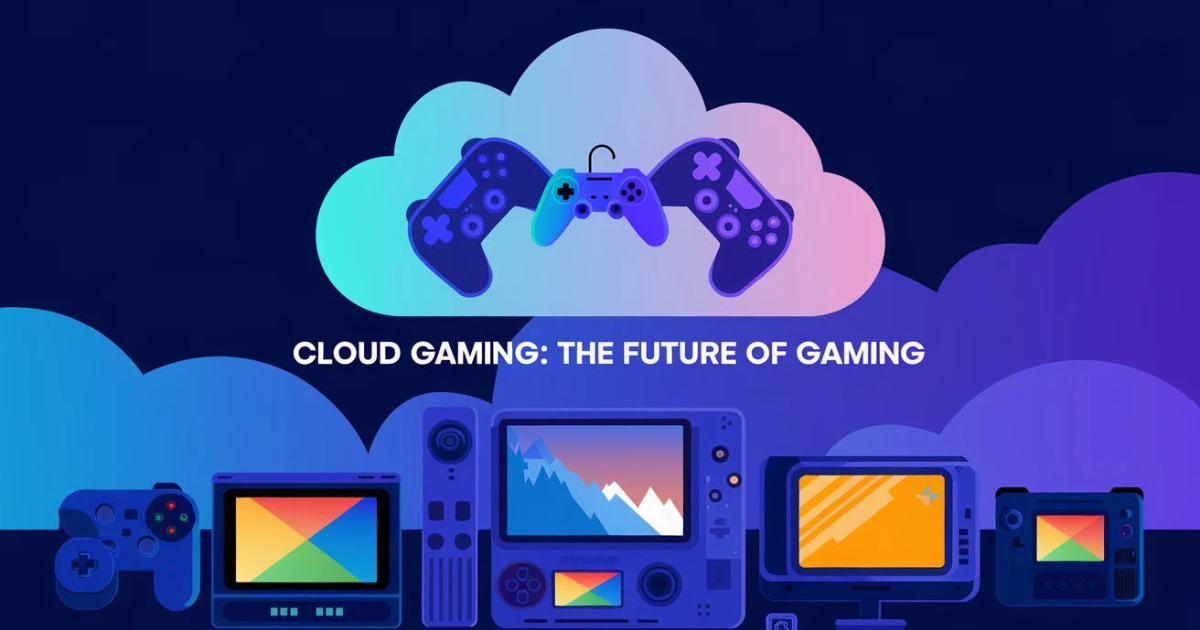
Cloud gaming is transforming the way people play video games. Instead of relying on powerful consoles or high-end PCs, players can now stream games directly from remote servers to their smartphones, tablets, laptops, or smart TVs. Much like watching a movie on Netflix, cloud gaming allows users to access high-quality games instantly — without downloads, installations, or expensive hardware upgrades.
As internet speeds improve and 5G becomes more widespread, cloud gaming is quickly becoming one of the most important trends in the gaming industry.
What Is Cloud Gaming?
Cloud gaming, also known as game streaming, is a technology that runs video games on powerful remote servers rather than on a player’s device. The gameplay is processed in data centers and then streamed to the user’s screen in real time. The player’s inputs (such as controller movements or touchscreen taps) are sent back to the server instantly.
This means even devices with modest hardware can run graphically demanding AAA games smoothly, as long as they have a stable internet connection.
Major platforms like Xbox Cloud Gaming, NVIDIA GeForce Now, and PlayStation Plus Premium have helped bring cloud gaming into the mainstream.
How Cloud Gaming Works
The process behind cloud gaming involves three key steps:
- Game Processing on Remote Servers
High-performance servers in data centers run the game using powerful GPUs and CPUs. - Video Streaming to the Player
The server compresses the gameplay into a video stream and sends it to the player’s device over the internet. - Real-Time Input Feedback
When the player presses a button or moves a joystick, that input is transmitted back to the server instantly.
The speed of this process depends on internet bandwidth and latency (delay). Faster connections provide smoother gameplay with minimal lag.
Benefits of Cloud Gaming
1. No Expensive Hardware Required
One of the biggest advantages of cloud gaming is accessibility. Players don’t need to invest in costly consoles or gaming PCs. A basic smartphone, tablet, or laptop can run advanced titles through streaming.
2. Instant Access to Games
Cloud platforms allow players to start games instantly without waiting for large downloads or updates. This convenience is especially appealing in an era where some games exceed 100GB in size.
3. Cross-Device Flexibility
With cloud gaming, players can switch between devices seamlessly. For example, you can start a game on your TV and continue on your phone while traveling.
4. Reduced Storage Limitations
Since games run on remote servers, they don’t take up storage space on personal devices.
Challenges of Cloud Gaming
Despite its advantages, cloud gaming still faces some limitations:
- Internet Dependency: A stable, high-speed internet connection is essential.
- Latency Issues: Even small delays can affect competitive gameplay.
- Data Usage: Streaming high-quality games consumes significant data.
- Regional Availability: Some services are limited to certain countries.
These challenges are gradually being addressed as global internet infrastructure improves.
The Role of 5G and Future Technology
The expansion of 5G networks is accelerating cloud gaming growth. With faster speeds and lower latency, 5G reduces lag and improves streaming quality. This makes mobile cloud gaming more practical and enjoyable.
Tech companies like Microsoft, Sony, and NVIDIA continue to invest heavily in cloud infrastructure, signaling strong confidence in its future.
As artificial intelligence and edge computing advance, cloud gaming performance is expected to become even more seamless.
Is Cloud Gaming the Future?
Cloud gaming is not necessarily replacing consoles or PCs — at least not yet. Instead, it complements traditional gaming by offering greater flexibility and accessibility. For casual players and mobile users, it provides an affordable entry into high-quality gaming. For hardcore gamers, it offers convenience and cross-platform continuity.
Industry analysts predict steady growth in cloud gaming adoption over the next few years as technology improves and subscription models become more attractive.
Conclusion
Cloud gaming represents a major shift in how games are delivered and experienced. By moving processing power to remote servers, it eliminates hardware barriers and makes premium gaming more accessible than ever before.
While challenges like internet speed and latency remain, ongoing technological advancements are steadily overcoming these obstacles. As 5G expands and companies continue investing in infrastructure, cloud gaming is poised to become a central pillar of the gaming industry.