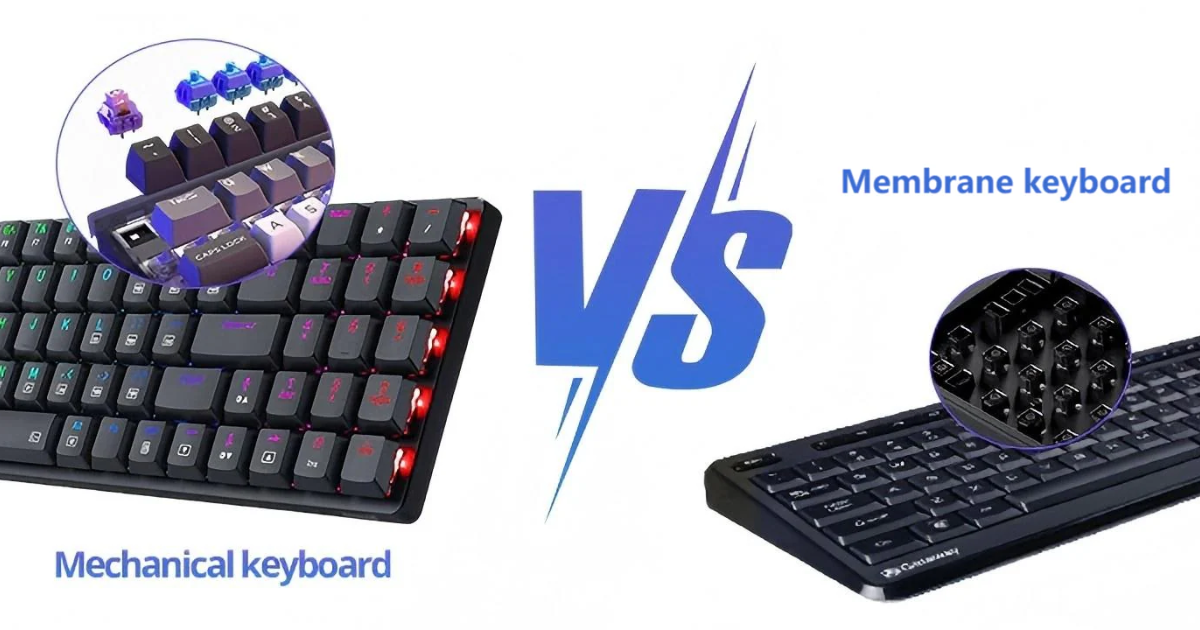
When choosing a keyboard for gaming or daily computer use, two main types dominate the market: mechanical keyboards and membrane keyboards. Both types serve the same purpose but use different technologies to register keystrokes, which affects typing feel, performance, durability, and price.
Understanding the differences between these keyboards can help you choose the best option for your gaming setup or workspace.
What Is a Mechanical Keyboard?
A mechanical keyboard uses individual mechanical switches under each key. When you press a key, the switch activates and sends a signal to the computer. These switches use springs and metal contacts that provide tactile feedback and faster response times.
Mechanical keyboards are popular among gamers and professional typists because of their precise keystrokes and satisfying typing experience. They also come with different switch types such as linear, tactile, and clicky, allowing users to choose the feel they prefer.
Another advantage is durability. Mechanical switches can last 50 to 100 million keystrokes, making them a long-term investment for heavy users.
What Is a Membrane Keyboard?
Membrane keyboards use a rubber dome layer beneath the keys instead of individual switches. When you press a key, the rubber dome collapses and makes contact with a circuit to register the input.
This design makes membrane keyboards softer and quieter than mechanical keyboards. They also require fewer components, which makes them more affordable.
Membrane keyboards are commonly used in offices, schools, and basic home setups because they are simple and budget-friendly. However, their lifespan is usually shorter, typically 5 to 10 million keystrokes.
Key Differences Between Mechanical and Membrane Keyboards
1. Typing Experience
Mechanical keyboards provide a clear tactile feedback when a key is pressed, which many users find satisfying and precise. This feedback helps typists and gamers know exactly when a key has been activated.
Membrane keyboards, on the other hand, have a soft and “mushy” feel because of the rubber dome mechanism. While this may feel comfortable for some users, it often lacks the precision of mechanical switches.
2. Gaming Performance
Mechanical keyboards are usually preferred by gamers because they offer faster response times and better accuracy. Many mechanical keyboards support features like N-Key rollover and anti-ghosting, which ensure multiple key presses are registered correctly during fast gameplay.
Membrane keyboards can still work for casual gaming, but they may feel less responsive and sometimes struggle with multiple simultaneous key presses.
3. Durability and Lifespan
Durability is one of the biggest advantages of mechanical keyboards. Because each key uses a separate switch, they are designed to last significantly longer than membrane keyboards.
Membrane keyboards rely on rubber domes that wear out over time, which can lead to keys becoming less responsive after heavy use.
4. Noise Levels
Mechanical keyboards are usually louder, especially models with clicky switches. While many gamers enjoy the sound, it can be distracting in shared environments.
Membrane keyboards are much quieter, making them better for offices, libraries, or late-night use.
5. Price and Customization
Membrane keyboards are generally cheaper because of their simpler design. Many basic models cost under $30, making them ideal for budget users.
Mechanical keyboards are usually more expensive but offer customization options, including replaceable keycaps, programmable keys, and different switch types.
Which Keyboard Should You Choose?
Choosing between a mechanical and membrane keyboard depends on your needs and budget.
- Choose a mechanical keyboard if:
- You are a gamer or heavy typist
- You want faster response and durability
- You enjoy tactile feedback and customization
- Choose a membrane keyboard if:
- You want a quiet keyboard
- You have a limited budget
- You mainly use your computer for basic tasks
Conclusion
Both mechanical and membrane keyboards have their own advantages. Mechanical keyboards offer better performance, durability, and customization, making them ideal for gamers and professionals. Membrane keyboards, however, remain a great choice for users who prefer quiet typing and affordable hardware.
By understanding the differences between these two keyboard types, you can select the option that best fits your gaming setup and everyday computing needs.